
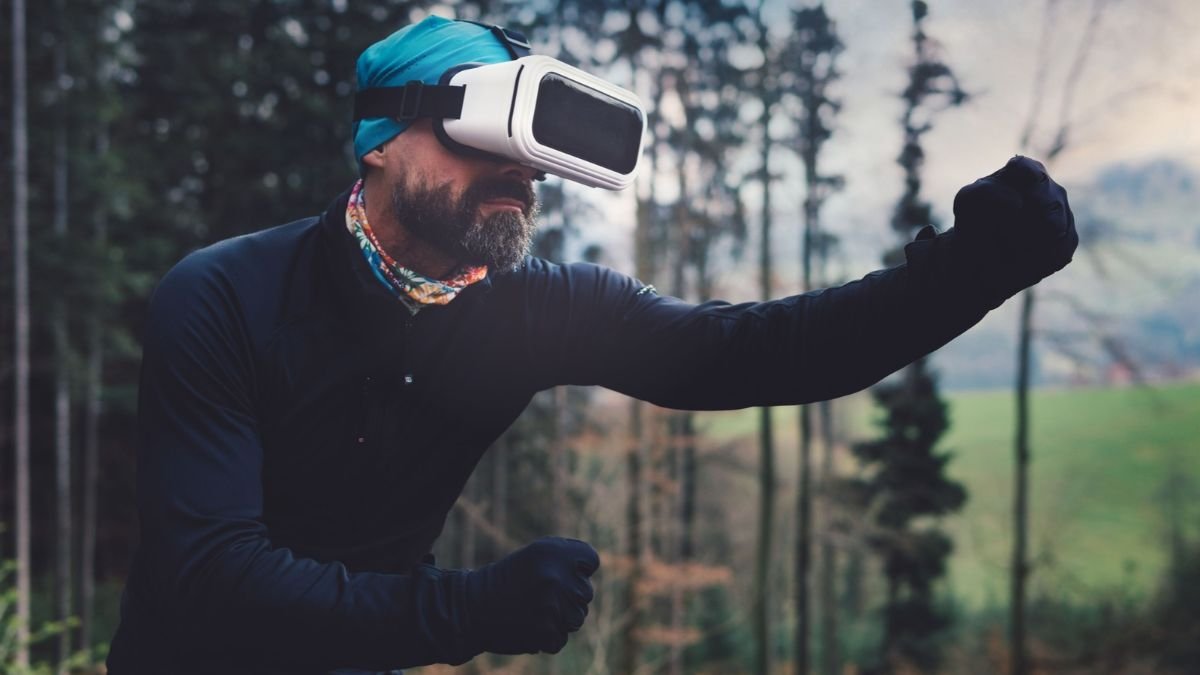

Virtual reality in tourism allows people to explore a destination before booking, explore a hotel room before making a reservation, and even visit a historic place that may not be accessible to them at all.
The technology of virtual reality allows a visitor to transport themselves to a beach, a museum, or a cabin on a ship using either a headset, a smartphone, or even a regular browser.
When it comes to the business side of tourism, the challenge is not whether VR serves as a fun gimmick. It is the way in which VR pays for itself: by driving sales, by improving planning, by providing an immersive experience for visitors, by helping to preserve heritage sites, and by allowing those who are unable to travel to experience the sites.
Table of Contents
How Virtual Reality Is Transforming Tourism
Tourism is a difficult product to evaluate beforehand; you pay for it and only then understand if the room, scenery, or excursion met your expectations. VR addresses this problem directly: a person can view a location at its actual size, listen, and draw their own conclusions.
It happens through different stages of the tourism process:
- Idea formation and inspiration. VR content can make a destination seem so real that it inspires tourists to take a trip there.
- Planning and selection. Virtual tours of various hotels, rooms, cruise ship cabins, and attractions give tourists an opportunity to evaluate their options.
- Booking. A tourist who saw his future room is usually much more ready to make a booking.
- Tourist experience. Tourists may view a building that is destroyed or see a restricted part of a destination.
- Access. People with certain disabilities, illnesses, financial limitations, or not much free time can still experience the destination.
- Training and selling. Staff members and travel agencies can do both using the same content.
Virtual reality travel is not an alternative to the physical travel experience. In most cases, it is considered an approach to generating desire for and confidence in the experience.
Virtual Destination Tours & Travel Preview
Through destination previews, one is able to gain knowledge about what a specific destination provides within a short amount of time. This can be anything from 360-degree videos of beaches at sunset, guided tours of historic locations, and even a virtual helicopter tour of a city.
Through VR in Tourism, all of these can become a reality and help travelers to virtually explore the destinations and make up their mind about visiting them.
A good and famous example of destination preview was the “Try Before You Fly” campaign created by the UK travel agency Thomas Cook.
According to the CNBC report, in 2015, the UK travel agent Thomas Cook, together with Samsung and the VR studio Visualise, made short videos of destination experiences, which were viewed on Samsung Gear VR headsets in their stores in the UK, Germany, and Belgium.
Visualise claimed the 190 percent increase in New York excursion revenue based on their production studio and on a pilot which is already several years old. So take it as a good example of a campaign which provided such results, but don’t consider it a benchmark.
The key learnings remain the same:
- Keep the preview short. A few minutes would be enough to engage a viewer.
- Focus on what the traveler can buy.
- Situate your VR headset in the decision-making process. Putting the headset in-store, at events, or during a sales meeting is more effective than making consumers seek it out online on their own.
- Give users an option without a headset. An app or website will give access to all those users who can’t afford a headset at present.
How Hotels and Resorts Use Virtual Reality
Hotels were among the first tourism business sectors to experiment with VR technology, and they are still discovering new applications for it today.
Room and property preview. With virtual tours of both the standard room and suite or villa, a potential guest can see what the room looks like and what views it offers. When it comes to resorts, virtual tours of the resort grounds, including pools, restaurants, and spas, are great for helping a family figure out whether the property is right for them.
In-hotel VR. Marriott created the “VRoom Service” in 2015, as explained by CNBC, a service that allows guests to borrow a VR headset and enjoy “VR Postcards” in locations including Chile, Rwanda, and Beijing.
Events and Weddings: The venue may allow planners to tour ballrooms and outdoor areas and check out different seating arrangements for the venue for a particular event.
Design and renovations: Before the renovations, the hotel may offer a virtual tour of the new lobby or rooms under design. This way, any design issues can be spotted beforehand.
Training of Staff: Using the same 3D tours, hotel staff members may be given training regarding the layout and procedures at the hotel.
What is common in all these examples is that VR allows us to show the true product.
Example: Exploring a Resort Through a Virtual Tour
Here’s an example of how it works. A family is weighing options between two beach resorts.
The family opens a virtual 360° tour of a family suite on the website of the first resort. They make sure there is enough space for the travel cot. Then they look at the view from the balcony before moving on to explore the kids’ club, swimming pool, and breakfast area.
There’s a hot spot in the room that shows the price and availability of the room. At the travel agency’s office, the agent uses a headset to show a similar preview of the resort’s spa facility to a couple.
Virtual Exploration of Tourist Attractions and Landmarks
Attractions employ virtual reality to broaden their appeal and get in touch with the public that has yet to visit the site. For instance, a museum can establish a virtual gallery. Similarly, a national park can offer visitors a preview of a trail within it. A theme park can offer an understanding of the atmosphere and layout of a specific ride.
In addition, the technology can be employed on-site for the purpose of enriching the visitor experience. The visitor will have an insight into how the landmark used to look like in the past; he or she will take a guided tour or go around closed areas.
The virtual reality could also be applied at the visitor center where visitors could be shown the landmarks virtually before walking around them. The technology will benefit operators in practical terms by spreading demand among less-visited sites and by offering a story about the site beyond the signs.
Virtual Reality for Cultural Heritage and Historical Sites
Heritage is a key VR application in tourism, providing access to elements otherwise inaccessible.
- Reconstructions. Teams of people who analyze archeological data can create 3D reconstructions of ancient cities, temples, castles, and ships, allowing tourists to navigate around them.
- Vulnerable or inaccessible sites. Some caves, tombs, or buildings may be too fragile to accept any visitors. Virtual replicas created by scanning such sites allow people to see them without causing further damage.
- Distant or inaccessible locations. Sites that are distant, dangerous, or in the process of restoration can still be visited virtually.
- Educational component. Storytelling and characters enable visitors to learn more about a specific location.
- Documentation. A virtual tour can also serve documentation purposes since its creation involves analysis and recording of the current state of a site.
By way of example, one can visit a museum near a destroyed fortress. At such museums, visitors wear VR devices and see the fortress as it was five centuries ago and then leave the museum to explore the real ruins, having gained more information about what they are seeing.
The virtual reconstruction does not substitute for the visit; it just enhances it.
In such cases, accuracy becomes important since the construction is a part of interpretation, and successful projects collaborate with historians and archeologists and specify which information comes from historical evidence and which is based on educated guessing.
Virtual Reality for Travel Planning and Destination Marketing
Tourism boards, travel operators, and agencies utilize VR technology as a marketing and planning tool.
Destination marketing. Tourism boards market the destination with VR films and experiences at industry events, retail locations, and even through the Internet.
Itinerary Planning. Planners and travel agents can use VR to walk customers through their plans and answer questions that photos may not address.
Trading and Sales Support. The exhibition booth will provide insight into the destination in just minutes, which is much better than using a brochure.
Training for Agents and Partners. Travel agents can familiarize themselves with destinations, properties, and ships they have not visited.
For a business to make full use of VR for marketing, one must ensure that there is a clear next step after the experience: either making a booking, sending inquiries, or taking advantage of special offers.
Interactive 360° Experiences and Immersive 3D Environments
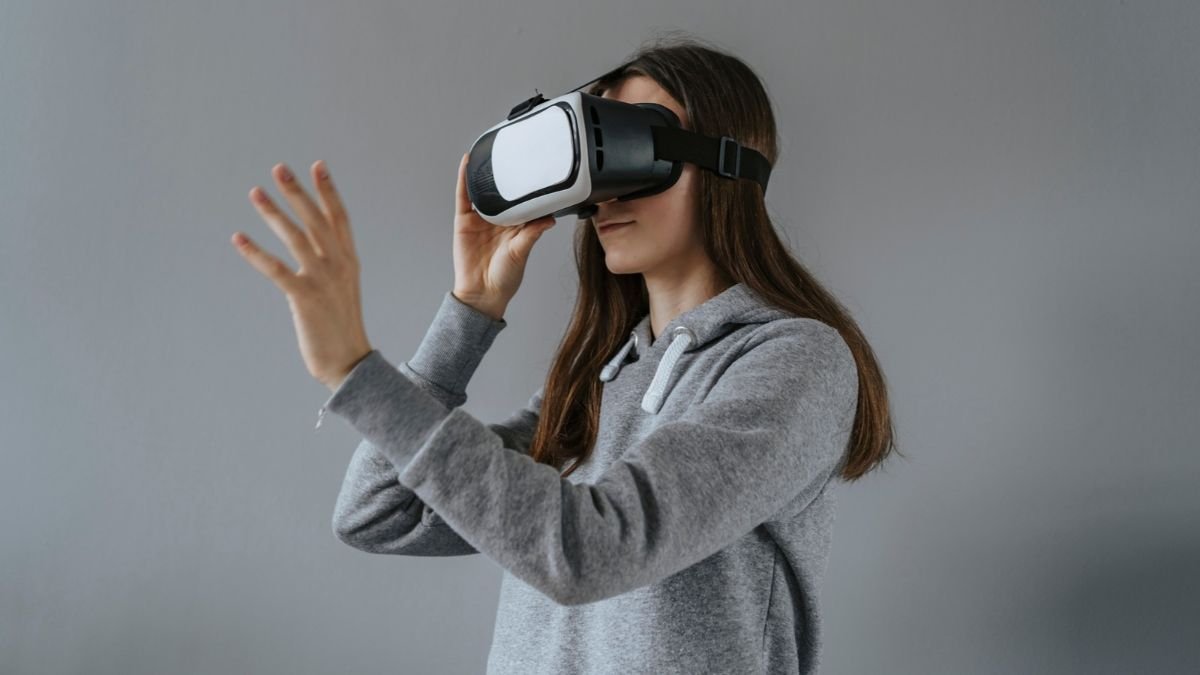
Not all tourism VR is the same. The format you choose affects cost, realism, and interaction.
| Format | What it is | Strengths | Limits |
| 360° photo | A panoramic still, linked into tours | Cheap, fast, works on any device | Fixed viewpoints, little interaction |
| 360° video | Spherical video of a real place | Movement, sound and atmosphere | Viewer cannot move freely, larger files |
| 3D scanned environment | A real place captured as a 3D model | Free movement, accurate scale | Costly, needs processing |
| Real-time 3D world | A built or reconstructed scene in a game engine | Full interaction, can show places that no longer exist | Highest production effort |
360° Tours are the most basic form to get started, and they are ideal for hotels and destinations with a current look. Real-time 3D Tours are suitable for reconstructions, plans, and destinations where visitors should be able to walk around, choose, and interact.
Many projects use both forms, offering 360° tours to reach a wide audience, and a more interactive 3D experience in specific places.
Interactive features provide additional value: hotspots giving extra information, the ability to navigate using a map, narrated tours, day or night time tours, or other options influencing the viewing experience.
Virtual Tours of Cruise Ships, Hotels and Other Accommodations
The cruise holiday is expensive, and ships are complex buildings that cannot be easily pictured; thus, virtual tours make it easier by showing:
- Categories of cabins at actual size, including balconies and bathrooms.
- Public spaces like restaurants, theatres, pools, and decks.
- Layout of the ship to let the guests know the distances on board.
- Activities and ports of call.
The same logic is applied to lodges, villas, holiday apartments, trains, and boats. When a customer sees the differences between three types of cabins, any possible misunderstanding and future complaints can be avoided, as the room is the same as shown in pictures.
Accuracy is important too. When the tour is better in the pictures, guests may be disappointed and ask for a refund, so the visualization and images must represent reality.
Benefits of Virtual Reality for Tourism Businesses and Travellers
- More confidence. People who have visited the location before booking are confident in their decision.
- Engagement. An immersive experience keeps people longer than pictures on the pages.
- More qualified inquiries. Guests will come with higher expectations about the product.
- Storytelling. VR creates an atmosphere and makes people feel emotions.
- Content sharing. The same 3D models and 360° videos can be used for websites, social networks, trade fairs, and presentations.
- Insights. Analytics can tell what rooms, views, or activities viewers prefer.
Be cautious about performance figures. Most of the numbers that you will find online come from either the suppliers or from earlier, small-scale campaigns. You should measure performance yourself by comparing inquiries, conversions, and bookings for people who have seen the VR content with those who have not.
Measuring the Impact of VR Tourism Experiences
Establish measures before you launch so that you can measure the impact that the VR is having. Measures could include:
- Number of views, completion rates, and time spent in the experience.
- Clicks on booking buttons, inquiry buttons, or special offers.
- The number of inquiries and bookings by people who saw the VR content compared to those who did not.
- The cost per booking, including production and distribution costs.
- The guest feedback on how well the product fulfilled the promises made in the VR experience.
When possible, conduct a test: present the VR experience to half of a group of visitors or agents but not to the other half and then compare the results.
Virtual Reality for Accessible and Remote Travel Experiences
VR can allow tourism for someone unable to go on a tour, while also making the process easy even for those able to go.
- Mobility and health. Someone unable to climb the mountain and walk the long distance will still be able to see the view.
- Time and costs. Everyone cannot afford or schedule a tour, but visiting remotely becomes more manageable.
- Conducting a virtual tour beforehand. Travellers with special requirements can plan their tours before to ensure accessibilities like distance from room to restaurant, width of doors.
- Alleviating stress. New flyers, or a traveller with a child requiring predictability, can practice at an airport and hotels.
- Remote education. Schools and communities can virtually visit a location.
- Reduction in pressure on vulnerable sites. Some people may opt to conduct a virtual visit, reducing crowds and wear and tear.
However, accessibility can be applied not only to physical places but also to virtual reality as well. For instance, one should provide subtitles, sitting mode options, comfort settings, as well as different options for users who cannot wear a headset.
Challenges of Implementing Virtual Reality in Tourism
VR is beneficial for this application, but there are certain barriers as well.
- Cost of content. Production of high-quality images takes time and money, and a startup firm might not require a fully customized experience.
- Accessibility. Not all tourists possess a VR headset; provide web and mobile versions, and also use VR headsets at the event and in shops.
- Quality. Low resolution, bad pictures, or jumpy scenes will make your destination look not so good. Bad VR is better than no VR.
- Causes nausea. People sometimes experience dizziness from VR; therefore, make the experience short and let users control their actions.
- Honesty. Virtual picture is more polished than real one makes dissatisfied tourists; therefore, be honest.
- Maintenance. Content should be updated because the hotel might undergo reconstruction, or attractions and seasons will change.
- Analytics. It is difficult to estimate the effect of VR directly, so track it before implementing VR.
- Logistics of hardware. The VR headset requires cleaning, charging, storage, and employees’ attention.
- Authenticity. Cultural attractions should be represented with respect to the local community, without turning it into a spectacle.
Also, privacy cannot be ignored. If you collect information about the places the viewer looks at or clicks on while using the VR content, collect only what is necessary and notify users.
How to Implement Virtual Reality in Tourism
- Define one clear goal: such as an increase in booking numbers at a certain hotel, better comprehension by the visitors of the facility, or a strong position in a trade fair.
- Select proper format: the 360 tour is usually the best choice to begin with. Apply real-time 3D if interaction or reconstruction is the aim.
- Take into account several devices: use the headset version, mobile application, and website version.
- Tie to concrete actions: connect the experience with booking pages, contacts, sales conversations.
- Do tests with real visitors: ensure comfort, clarity of perception, and the user’s ability to act.
- Collect the results and optimize: monitor the number of views, inquiries, and bookings, and apply the information for optimization.
- Publish new content regularly: decide whom to entrust with updating the virtual tour regularly when the property or the facility itself changes.
Future Trends in Virtual Reality Tourism
Three developments are making VR simpler for tourism companies. The light standalone headsets do not require any computer or cables. Browser-based virtual reality can be accessed by clicking a link.
Improved capture and editing systems, including the AI-powered ones, are reducing the cost of creating 3D worlds. While each of those lowers the threshold, the quality and honesty are more important than the technologies.
The use of VR technology along with AR and AI is another one of the trends that have emerged recently. It is possible to add interactivity to virtual tours with personalized suggestions, multilingual guides, and destination data in real time using the combination of these technologies.
As per the Grand View Research report, the value of the global virtual tourism market stood at USD 8.1 billion in 2024 and will reach USD 30.5 billion in 2030, growing at a CAGR of 24.9% between 2025 and 2030. Accurate visual representation and reliable information will be crucial for gaining travelers’ confidence.
Choosing a Virtual Reality Development Company for Tourism
Tourism companies rarely have in-house expertise in 3D capture, real-time development, and cross-device distribution. The company offering virtual reality development services could provide scoping of the initial project, capture or modelling, development of the interaction, and cross-device testing.
Ask for some examples from the tourism or hospitality industry, how they handle precision and updates, and what the post-launch support is.
Conclusion
Virtual reality in tourism is effective only in solving certain problems, such as helping tourists feel comfortable in a specific place, giving visitors a broader perspective of the location, or allowing those unable to travel to experience travel through VR.
It should begin with identifying the problem that needs to be solved, choosing the simplest form of virtual reality, and being realistic about its depiction of the real place.

GuideByTips Editorial is the editorial identity of GuideByTips.com, an independent blog covering technology, business, digital marketing, lifestyle, and other topics. Its content is published and maintained under the editorial oversight of its founder and managing editor, Deepak Setia.