

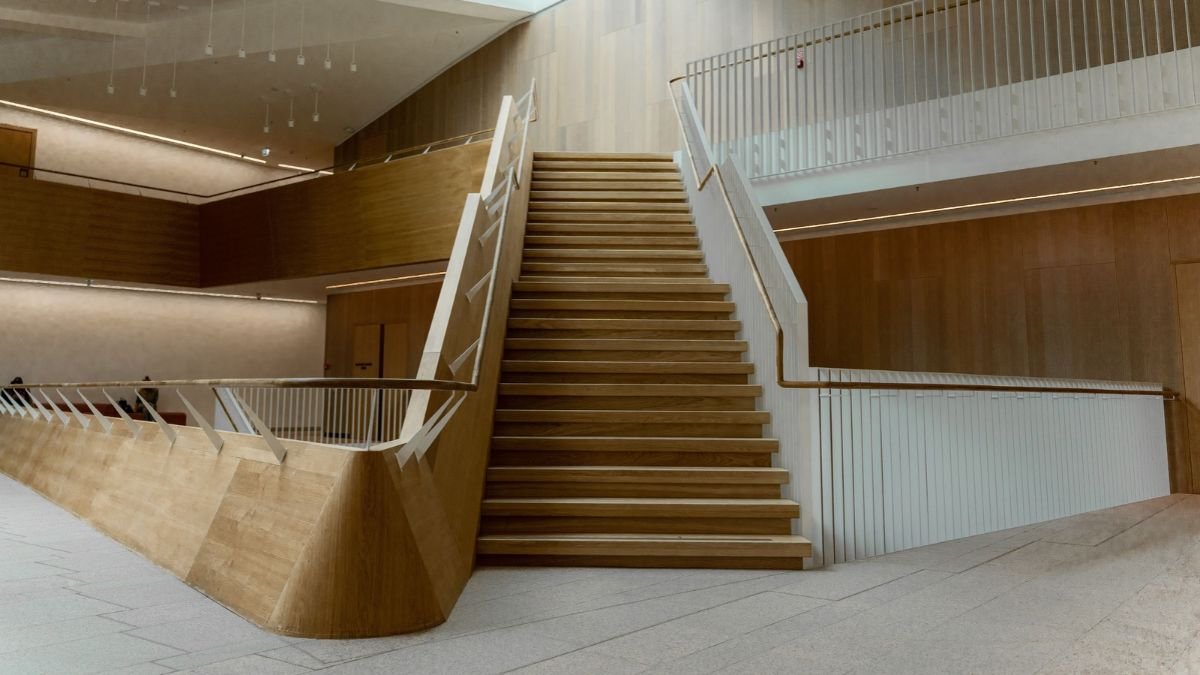

A wooden staircase that is very old will often show its age long before anyone gets to the top. One tread groans, one dips a little, and the handrail has got a wobble. A good staircase should not be creaking in every joint after years of foot use.
Good work begins long before the varnish is applied. The wood must fit the home, the dimensions must accord with the final floors, and the connections buried under the stairs need as much attention as the features which meet the eye.
Why Craftsmanship Is the Foundation of Every Quality Wooden Staircase
The stairs are taken rather automatically. Shopping bags are carried upstairs, youngsters rush down for breakfast, and furniture occasionally crashes against the railing. The structure must be able to resist the ever-changing load and provide safety for each step, not like a cupboard.
This is what makes things difficult most of the time. Even if the steps seem good, a foot might get trapped on a step that is a little higher than the next. A good joiner will take the final floor levels, look at the area, and work out how much the boards will go up and down before cutting the first board.
Little things count. The railing must be continuous at the curve. Newel posts should be firmly anchored. The finish where wood meets plaster should seem intentional, not filler-filled. This cannot be concluded from the wood species alone. A well-polished tread might be slippery when wearing socks. The edge profile and surface polish are good for regular use, not only for photographs.
Safety rules are also vital. Ireland. Technical Guidance Document K. When an existing flight is changed, special attention has to be paid to the rules and procedures concerning the individual building.
The Best Wood Species Used by Master Craftsmen for Staircases
Oak is popular for good reason. Oak’s texture, gloss, and adaptability make it great for old or new stairs. Even with the same wood, board color and texture vary. It takes time to match. Avoid random light grain to dark streaks by stretching the boards on the workshop floor before cutting.
Ash’s lighter hue and texture suit bright surroundings. Though strong, its light color and exposed grain may reveal dirt and flaws more than a darker hardwood. In fact, it is quite a reliable situation when you are relying on a proper absolute bespoke carpentry for such matters.
Walnut browns. It looks great on open staircases and railings but costs more. The darkest showroom sample may not reflect the lot.
Another quieter, cleaner option is beech. Machine-friendly smoothness. Control internal humidity and dry carefully. Pine may be used for painted surfaces, although stairs ding quicker.
Not only is the appropriate decision about appearance. Performance of the staircase relies on quality, strength, moisture condition, and finishing of the board.
How Joinery Techniques Determine the Strength and Beauty of a Staircase
With the steps in, most of the crucial linkages are not so simple to notice. In a normal housed-string flight, the treads and risers are contained in clean, carved grooves in the side strings. To tie such joints from behind, wedges are used.
Glue blocks may be utilized to strengthen the tread/riser junction. Install these items properly, and they will limit the movement that may otherwise cause creaking. They are little bits of wood that accomplish a big job. If the concealed joints are going to loosen, the solution is seldom to patch the obvious hole on top.
Cut threads are varied; the stages may be seen on the outside. When visible, the profile must be neatly defined and properly carved. Faults are not readily concealed. The tolerances on a handrail connector are very tight.” A good miter is no good if the rail moves when somebody leans on it.
Today’s machines can cut with remarkable accuracy. They don’t know whether to reject a bent board or whether a junction can be relaxed in assembly. Such selections are still made by the artisan.
How Bespoke Staircases Are Designed and Built to Last Generations
You cannot build a staircase from a picture in a catalog. What will really fit will be governed by the rise between levels, the layout of the walls, and the opening that is there. Measuring may be a little tricky in older houses where walls might not be square, and flooring may slope just a bit.
Here’s the whole survey. Then the designs indicate the form, size of the tread, the location of the railing, and the technique of fixing the building. The curving flights and winders are treated more carefully, and a mistaken turn might cause unsightly steps. Even the thickness of a new desired floor covering is important. If the first or final flight is changed, the stair may be uneven underfoot.
Timber shifts when moisture changes. It expands in moist circumstances and shrinks in dry conditions from heating inside. Good moisture control, good joint design, and good installation circumstances go a long way to minimizing difficulties, but no wood staircase ever stays totally firm permanently.
The finish includes durability. The protective coating is good for exposed parts against typical wear but requires upkeep. Dirt on shoes may destroy a shine surprisingly rapidly. The steps have been felt so they are not damaged by the surrounding construction activity before anybody can properly utilize them.
What to Look for When Choosing a Craftsman for Your Wooden Staircase
Photos illustrate style, but not necessarily structural quality. A final construction inspection can tell whether stairs fit risers cleanly, railings spin smoothly, and joints stay tight after use.
Good discourse should include pragmatic questions such as:
- Who monitors final floor levels and conformance?
- What grade of lumber will be supplied? What’s the moisture condition?
- How do you attach the threads, treads, and newels?
- Is it going to be installed, finished, and protected?
- What if a joint moves after being installed?
A good quote will demystify the structural work against the decorative baubles. The price is low and may not include removal of the existing steps, creating suitable surrounding plaster, or completing the railing. Before you go to work, it helps to look at the cost individually. A trip to the workshop may also explain the maintenance, labeling, and assembly of components before they move to the house, if feasible.
A vague promise of improved materials is worth less than a detailed sketch and a sample finish. The craftsperson should also pass on any design limits while there is still time for change.
Conclusion
Stairs build their reputations slowly, on the basis of a million regular trips between levels. It is the choice of wood, the neat joints and the perfect fitting that make it reliable. If you have uncommon proportions or qualities in your house, then entire custom carpentry is going to be about making the whole structure function, not just giving the stairs a nice finish.
Also Read: