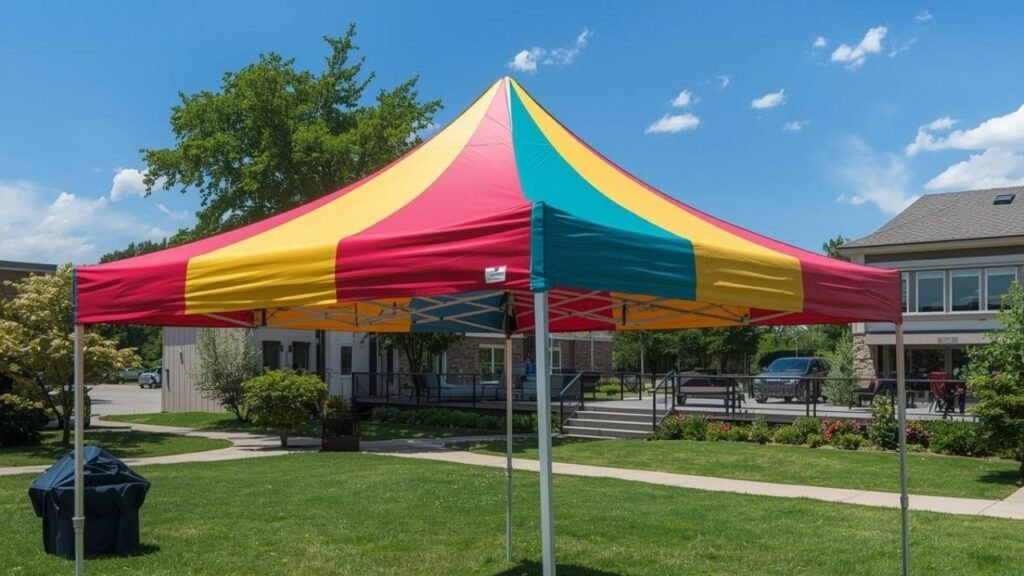
Canopy tents now form part of contemporary events, whether trade shows and exhibitions on a large scale, or brand activations and community festivals. In addition to the simple cover, a carefully selected canopy tent helps in branding, functionality, and the general flow of the events. Tents are gradually becoming an important resource in the minds of event professionals in terms of both visibility, attendee experience, and operational efficacy. High-quality custom canopies enable companies to be flexible in their presence across various locations while remaining uniform and professional. The choice of an appropriate canopy tent is more strategic than it might seem, as it is essential to consider the event’s objectives, the weather, branding requirements, and long-term use.
Five Essential Steps to Choosing the Right Canopy Tent

1. Define the Event Purpose and Usage Requirements, Especially for Food Vendor Tents
The initial step in finding the appropriate canopy tent is to determine the intended purpose. The type of the event directly impacts the size, structure, and material requirements. As an illustration, food vendor tents must have spacious interiors, effective ventilation, and hygienic, safe materials. On the contrary, corporate exhibitions can be clearer-sighted, brand-focused, and modular.
The decision to assemble or disassemble the tent for product display, sampling, networking, or sales defines the structural characteristics of the open sides, wall panels, or counters. The frequency of use is also important. Tents used for recurrent events should be designed with a longer lifespan and lighter setup, whereas those intended to be installed once can be more focused on appearance. An early definition is important because it will meet functional requirements without unnecessary upgrades or concessions.
2. Choose the Right Size and Layout for Visibility and Flow
The size of tents is an important factor to consider regarding the efficiency of space utilization and the comfort with which the visitors will interact with the arrangement. Modular sizes may be 10×10, 10×20, or larger, each serving a different purpose. The small tents are optimally used in this case because of the targeted interaction; the large footprints accommodate zoning for products, storage, and visitor movement.
Layout planning must take into account entry points, internal movement, and staff positions. Sufficient headroom is more comfortable and can be used to light or install hanging displays. An appropriate proportion of the canopy will enable an inviting environment, eliminate crowding, and facilitate smooth interactions. Choosing an appropriate size that matches the anticipated foot traffic is certain to make the tent an addition rather than a limitation to the interaction.
3. Evaluate Structural Strength and Material Quality
Durability is one of the most important attributes of canopy tents that people look for when using them outdoors. The materials and construction of the frame—usually made from steel or aluminum—directly affect how well a canopy performs, its overall weight, and its resistance to wind conditions and regular handling (hence, portability). While aluminum is known for its lightweight and corrosion-resistant properties, the additional strength of a steel canopy frame is better suited to larger crowds and longer periods of use.
In addition to frame characteristics, it is also critical to choose a high-quality canopy fabric. Heavy-duty fabrics with protective coatings against UV rays, moisture, and deterioration are the most preferred choices for canopy tents. In addition, the reinforced seams and strapping system for fastening help to prevent sagging and tearing over time.
4. Prioritize Branding and Customization Options
The canopy tent serves as a visual anchor for attendees of a larger, crowded event environment. Customization features can include printed canopy tops, printed valances, printed side walls, printed accessories, and added graphics to create a brand communication tool. Through high-resolution printing, color accuracy, and the consistent placement of a business logo, a canopy tent can reinforce brand recognition.
When customizing a canopy tent, the design should be both aesthetically pleasing and easy to use. Removable panels provide versatility for different event types, while interchangeable graphics support a continually evolving marketing campaign. Placing a brand on a well-designed canopy tent provides a company with visibility from multiple angles without detracting from the overall structure.
5. Consider Setup Efficiency, Storage, and Long-Term Value
People in the event industry frequently have very limited time available to set up and tear down their events, which creates a need for efficient setups and takedowns. Canopy tents that feature user-friendly assembly methods, clearly labeled parts and pieces, and lightweight frames offer users reduced labor costs and fewer setup mistakes. Canopy tents are easily transported and compactly stored, making them ideal for multiple event teams.
Long-term value is more than just an initial price. A good-quality tent can withstand many uses over time, work in many different types of events, and maintain the same appearance; therefore, it will produce a greater return on investment for the user. Users will get the greatest value from their canopies if they evaluate the warranties, replacement part availability, and support they provide to ensure the canopy remains a useful asset rather than a recurring cost.
End Point
The strategic selection of a tent canopy affects not only the success of an event but also the overall perception of a brand and the effective function of operations at such an event. Through purpose definition, right-size and layout selection, material evaluation, customization considerations, and long-term usage expectations, an event professional can choose a tent to ensure they receive maximum benefit from their purchase. A tent canopy chosen with thoughtful consideration is effective in supporting overall event success by enhancing event visibility and being adaptable to changing event requirements.